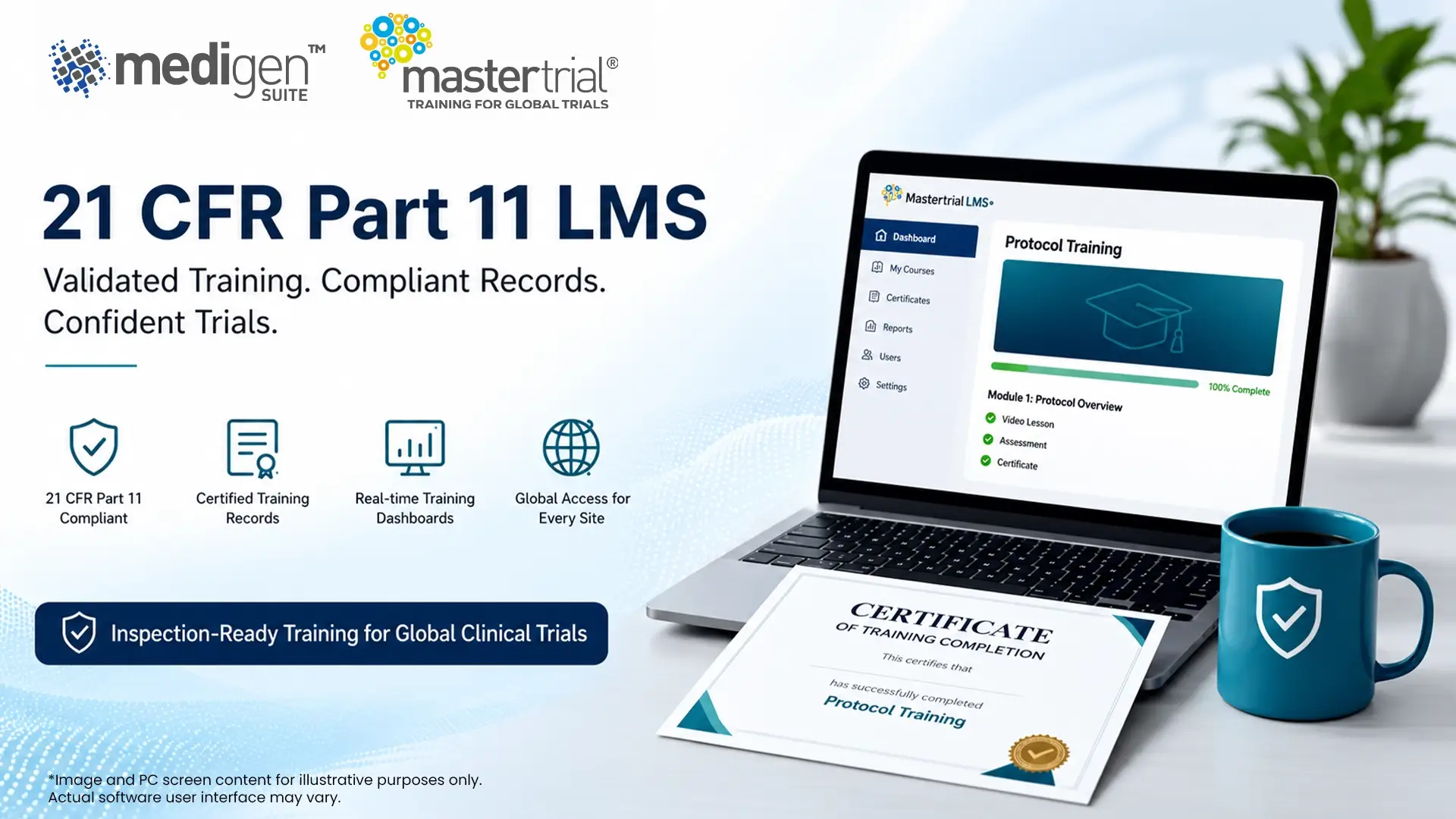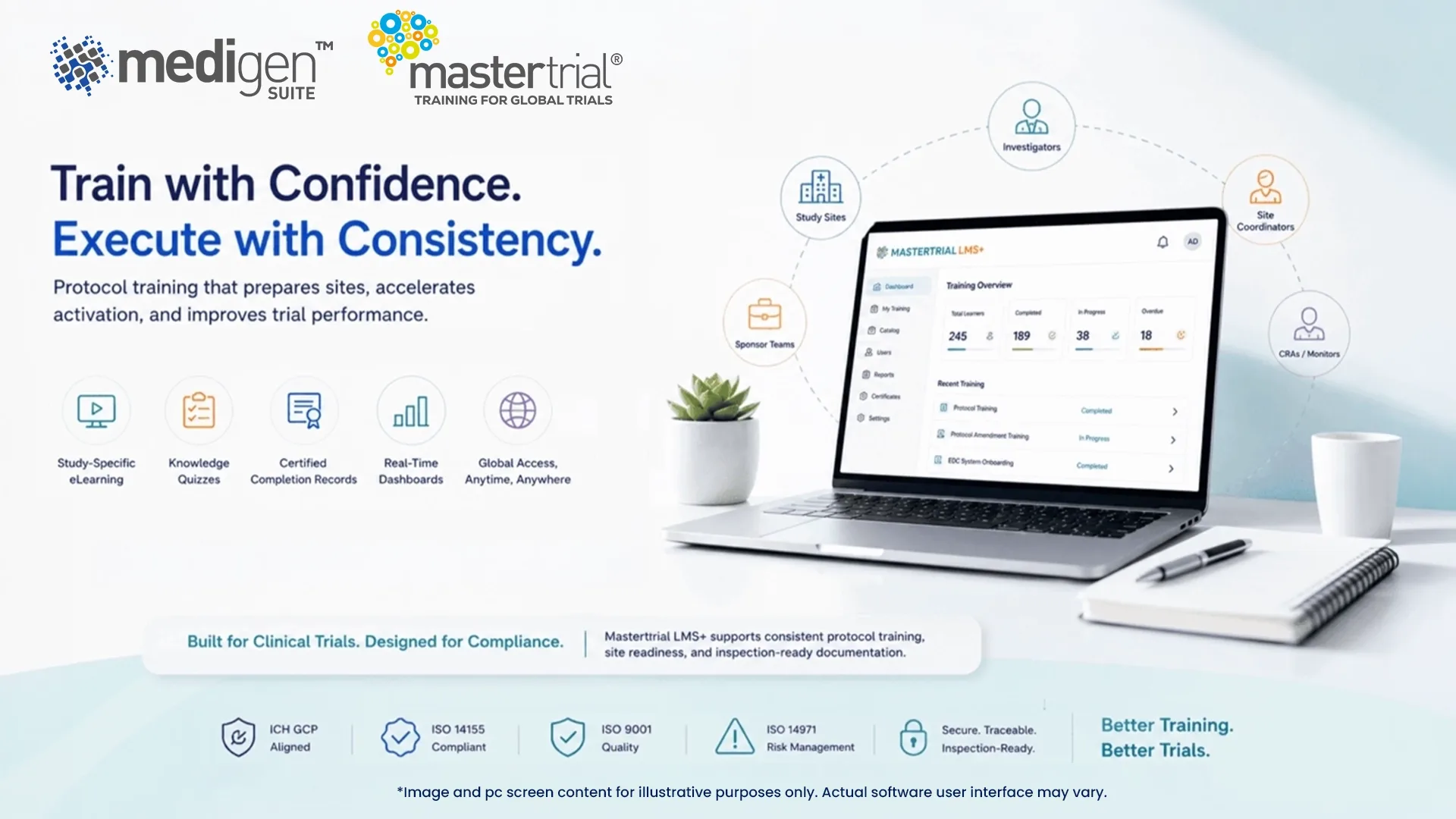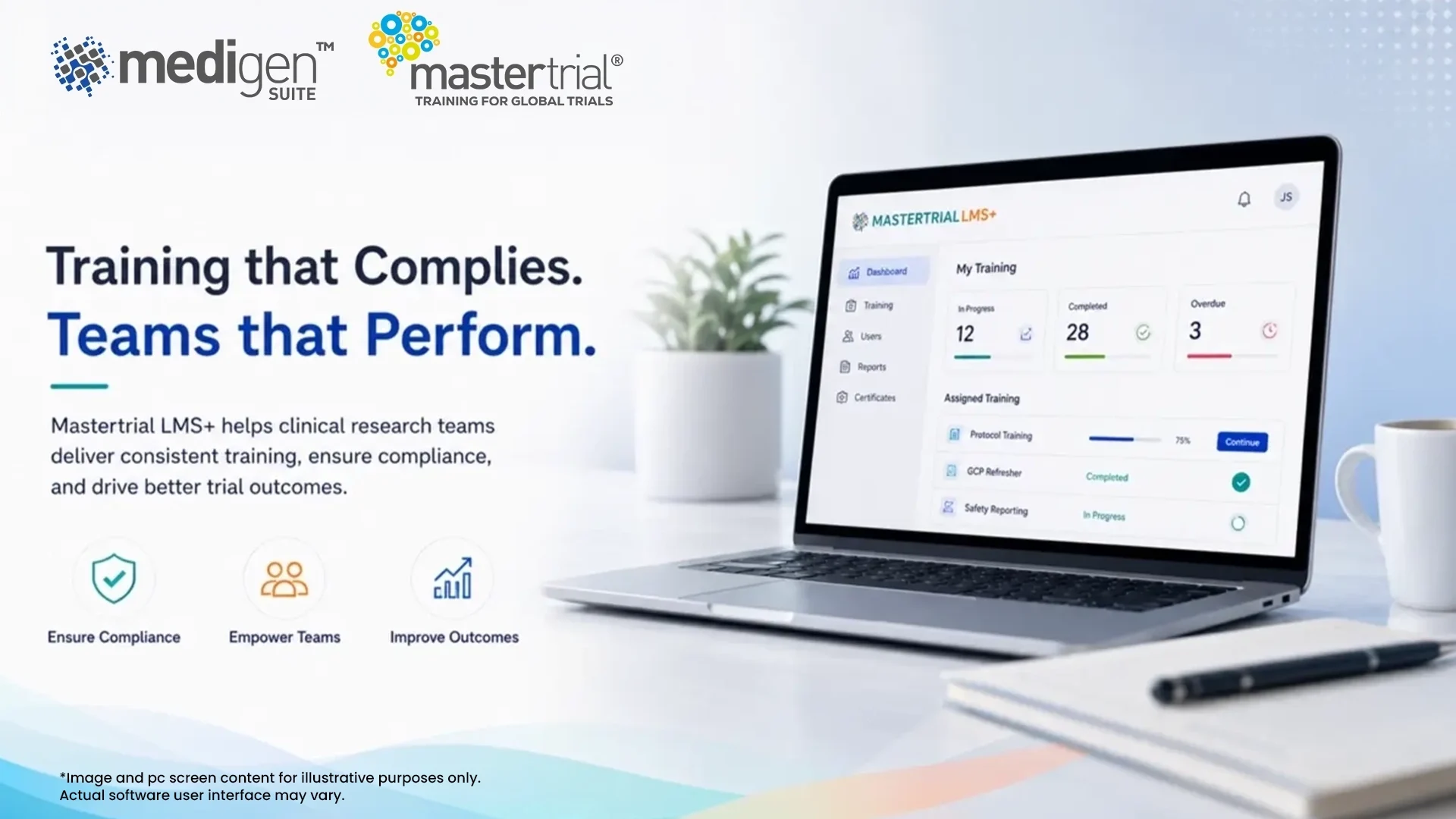
Clinical trial training keeps investigators, coordinators, and monitors aligned with the protocol. This collection covers investigator training, eLearning, GCP compliance, and certified completion tracking – and how a validated LMS accelerates site activation while keeping training records inspection-ready.


  • CTMS, EDC, eLearning, ePRO/eCOA11th September 202610.5 min

    Clinical trial software for the connected study stack

    Clinical trials are generating more data from more sources, while study teams are coordinating increasingly specialized workflows. Choosing clinical [...]

  • CTMS, EDC, eLearning20th August 202611 min

    Practical ways to reduce clinical trial start-up delays

    Clinical trial start-up is complex by design. Regulatory approvals, contracts, site readiness, database build, training, supplies, and operational planning [...]

  • CTMS, EDC, eLearning12th August 20269.2 min

    Seamless global clinical trial management across 40+ countries

    Expanding a clinical program across 40 or more countries opens access to broader patient populations, diverse research networks, and [...]

  • eLearning10th July 20267.2 min

    Choosing a reliable 21 CFR Part 11 LMS for trial sites

    Clinical trial training is not just a logistical exercise. It is a regulated process that directly affects protocol compliance, [...]

  • eLearning28th June 20265.7 min

    Smarter clinical research associate training for global trials

    Strong clinical research associate training is one of the most effective investments sponsors can make to improve trial quality, [...]

  • eLearning18th June 20265.7 min

    Confident protocol training for high performing study sites

    Clinical trials rarely fall behind because of a single major issue. More often, delays begin with inconsistent training, incomplete [...]

  • eLearning18th June 20266.6 min

    Training management system: why trials need a dedicated validated LMS

    Summary: As clinical trials become increasingly complex, training management can no longer be treated as a purely administrative function. [...]