
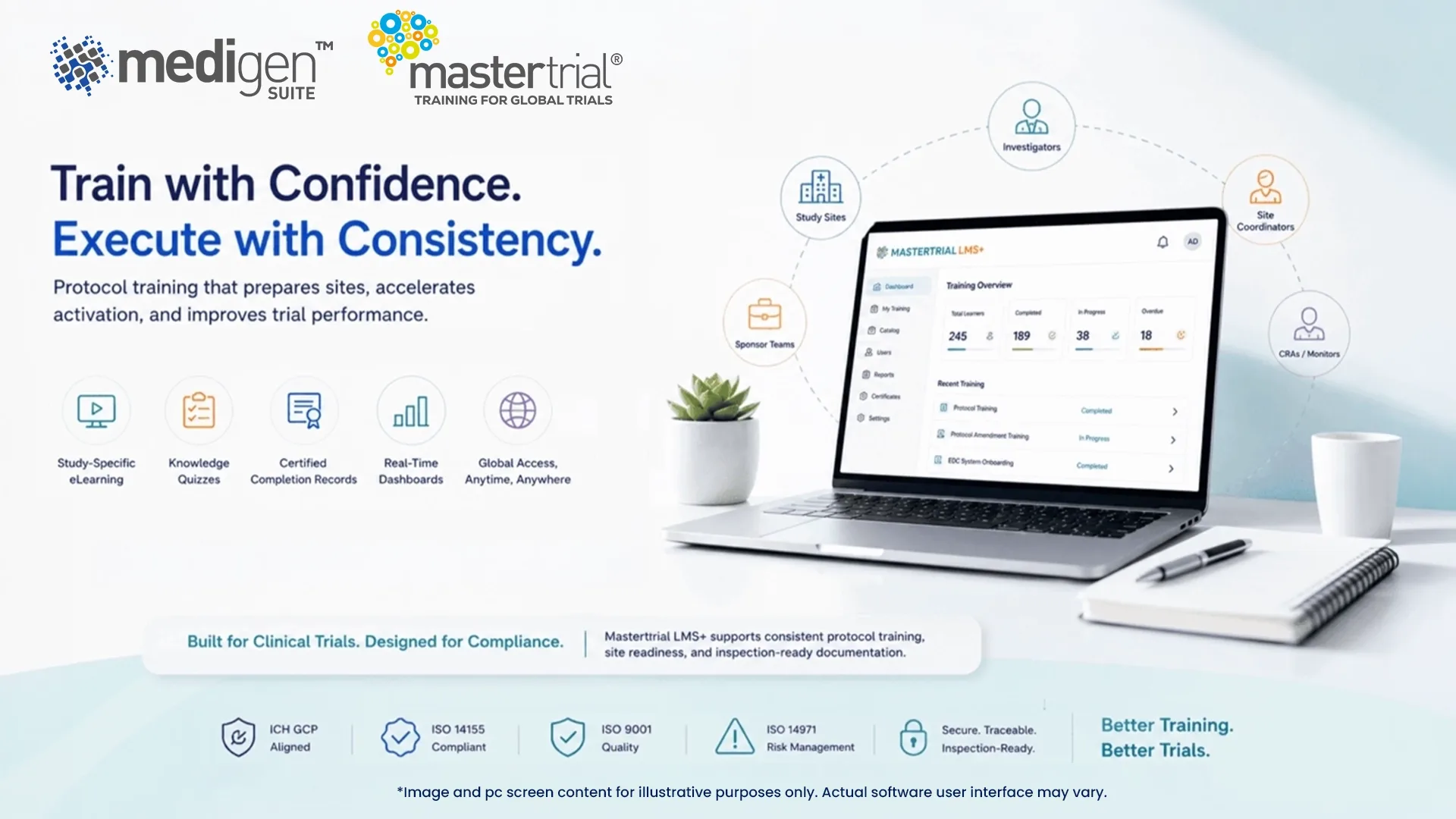
Clinical trials rarely fall behind because of a single major issue. More often, delays begin with inconsistent training, incomplete onboarding, or gaps in study knowledge across participating sites. Effective protocol training addresses these challenges before the first participant is enrolled, helping sponsors and contract research organizations (CROs) establish consistent execution from day one.
As studies become more complex, training must do more than distribute slide decks or schedule online meetings. Modern clinical operations require scalable, standardized education that prepares every investigator, coordinator, clinical research associate (CRA), and study stakeholder to execute the protocol correctly. The quality of protocol training has become a direct contributor to site readiness, site activation, protocol compliance, and overall study performance.
Why protocol training directly impacts study success
The protocol is the operational blueprint for a clinical trial. Every eligibility assessment, visit schedule, endpoint collection, safety procedure, and data entry process depends on site personnel interpreting and applying it consistently.
When training is inconsistent, the effects quickly appear throughout study operations:
- Delayed enrollment of first patientProtocol deviations
- Inconsistent source documentation
- Higher query volumes in the electronic data capture (EDC) system
- Increased monitoring effort
- Slower database lock
- Additional costs associated with retraining
Global multicenter studies magnify these challenges. Sponsors often work with dozens or hundreds of research sites across multiple countries, each with different staffing models, languages, and levels of research experience. Delivering the same information through site initiation visits or live online sessions alone rarely provides the consistency required for modern clinical trials.
Standardized digital protocol training creates a repeatable process that ensures every participant receives the same study-specific education regardless of location or timing.
Why Is Effective Protocol Training Critical to Clinical Trial Success
Effective protocol training prepares study teams to perform critical activities before enrollment begins, including:
- Applying inclusion and exclusion criteria consistently
- Following study visit schedules
- Completing electronic case report forms (eCRFs) correctly
- Using EDC, ePRO, eConsent, and other study technologies
- Managing investigational product procedures where applicable
- Following safety reporting workflows
- Understanding protocol-specific operational requirements
Training should also extend beyond investigators. Coordinators, CRAs, monitors, sponsor teams, imaging vendors, laboratory partners, wearable technology providers, and other stakeholders all contribute to successful protocol execution.
Providing each group with role-specific education reduces confusion while improving coordination across the study.
How Can eLearning Overcome Common Clinical Trial Training Challenges
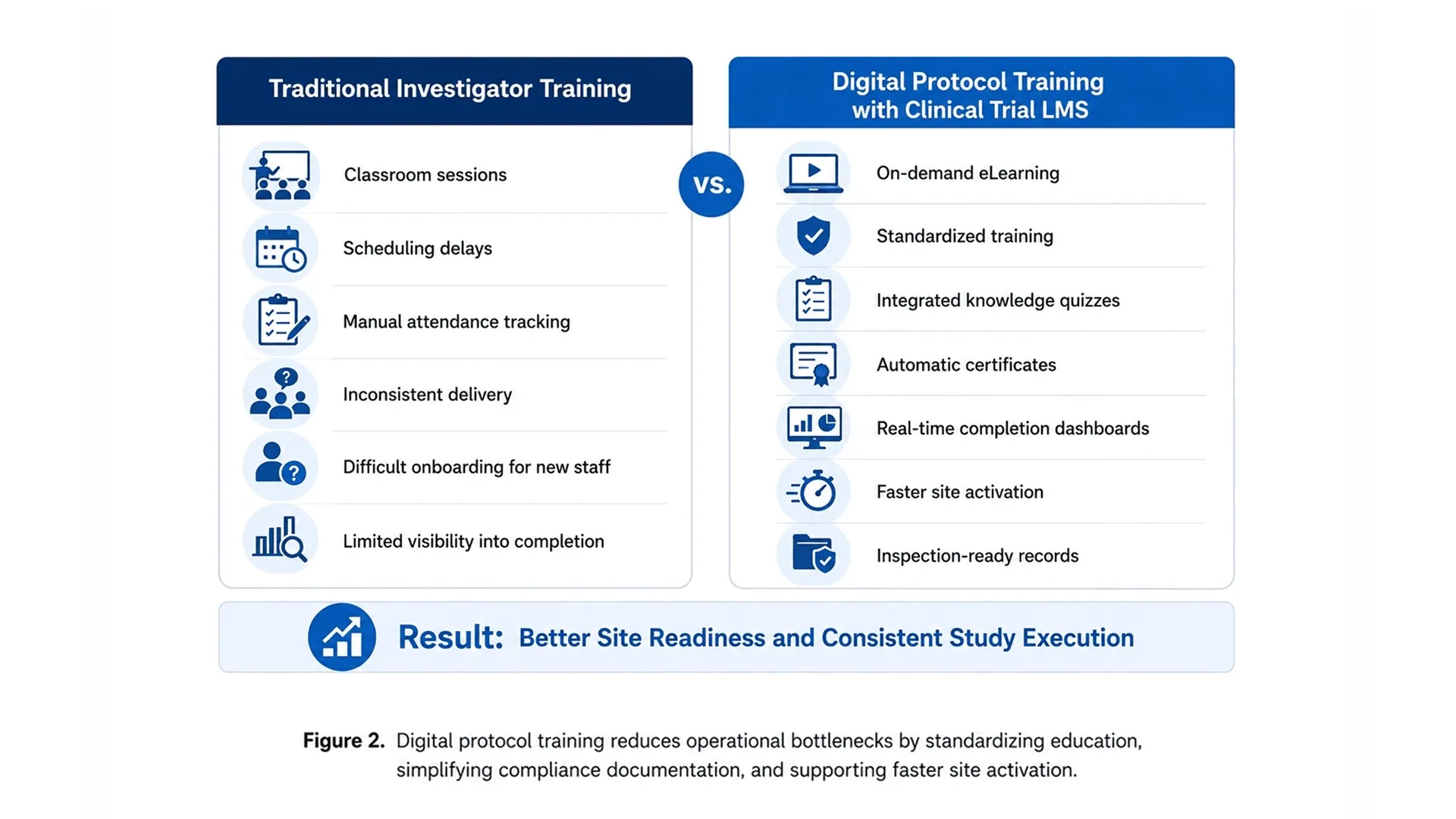
Traditional instructor-led training often introduces problems such as:
- Scheduling delays
- Variable presentation quality
- Inconsistent messaging
- Limited opportunities for knowledge validation
- Difficult documentation of attendance
- Manual tracking of training completion
Remote, structured eLearning addresses many of these operational bottlenecks by making standardized education available whenever participants need it.
Rather than waiting for the next scheduled session, newly assigned coordinators or investigators can complete study-specific training immediately, supporting faster onboarding throughout the study lifecycle.
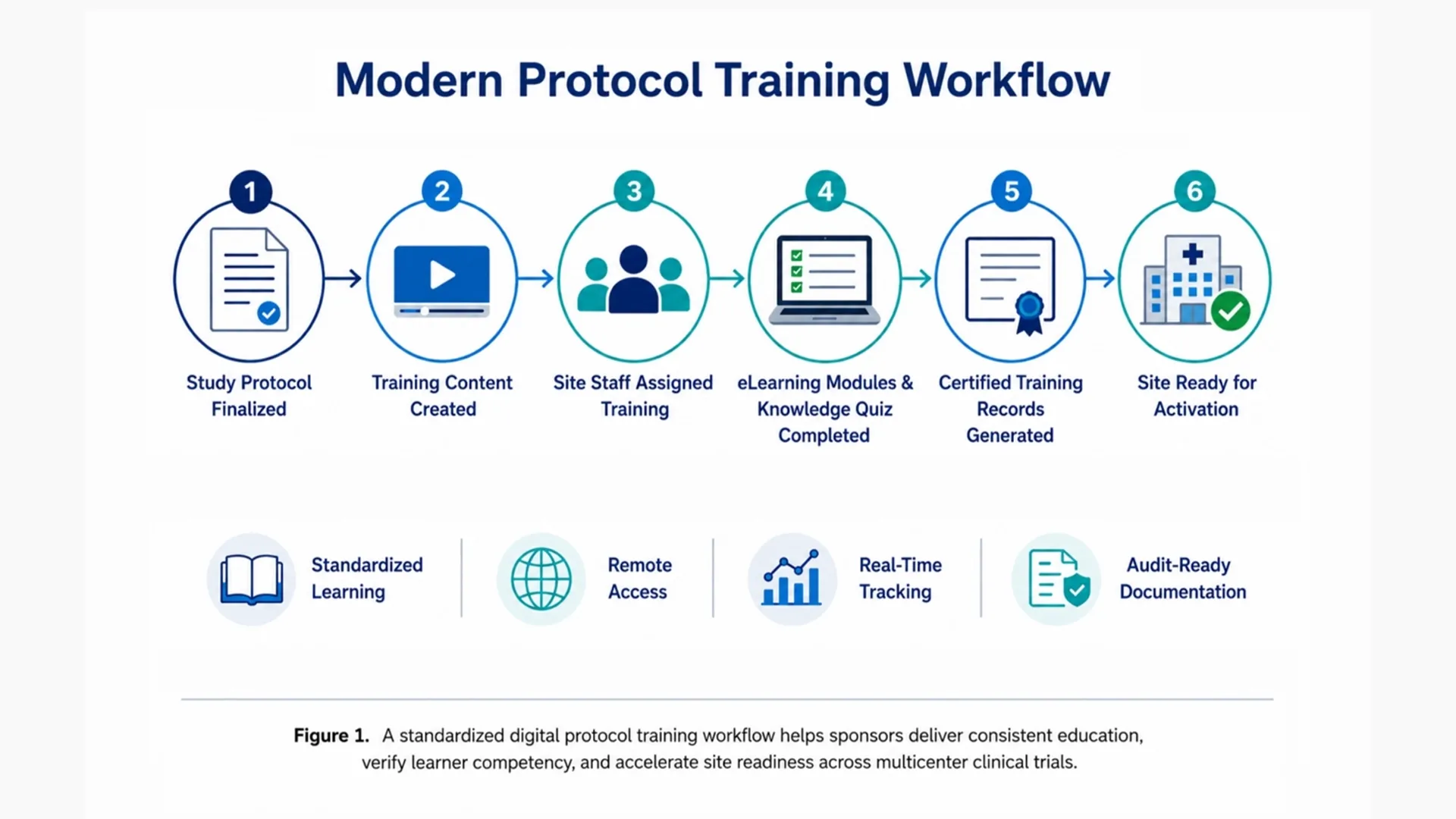
Comparing common approaches to protocol training
Different training models provide different operational benefits. Sponsors should evaluate approaches based on scalability, consistency, documentation, and long-term study support.
| Training Approach | Traditional Instructor-Led Training | Digital eLearning |
| Delivery consistency | May vary by presenter | Standardized across all learners |
| Global scalability | Limited by scheduling | Supports global multicenter studies |
| New staff onboarding | Often delayed until next session | Immediate remote access |
| Knowledge assessment | Often informal | Integrated quizzes validate understanding |
| Training documentation | Frequently manual | Automatically generated completion records |
| Protocol amendment training | Requires additional sessions | Updated modules can be assigned quickly |
| Sponsor oversight | Manual reporting | Real-time completion dashboards |
Digital learning does not necessarily replace live interaction. Instead, it complements training sessions by ensuring every learner receives standardized education while preserving opportunities for scientific discussion when needed.
How Mastertrial LMS+ supports protocol training and site activation
Mastertrial LMS+ was designed specifically for the training of clinical trial personnel rather than general corporate learning. Its capabilities align with the operational requirements of sponsors and CROs managing multicenter studies where consistency and documentation are essential.
The platform supports study-specific training programs tailored to individual protocols, allowing organizations to build structured educational pathways for investigators, coordinators, CRAs, monitors, sponsor personnel, and other study stakeholders.
Key capabilities include:
- Structured video-based eLearning modules
- Study-specific protocol training
- Protocol amendment training
- System onboarding for EDC, ePRO, medical devices, wearables, and study technologies
- Integrated quizzes to validate learner understanding
- Automatic generation of certified training completion records
- Customized training certificates
- Individual user authentication
- Real-time training completion dashboards
- Remote access through an anytime, anywhere learning platform
These capabilities help sponsors eliminate many scheduling delays associated with classroom training while improving visibility into overall training progress.
As additional site personnel join during recruitment, Mastertrial LMS+ enables rapid onboarding without waiting for the next scheduled training session. This flexibility supports faster patient enrollment and smarter trial execution while helping maintain consistent protocol knowledge throughout the study lifecycle.
The platform also centralizes education across multiple operational areas, including:
- Study protocols
- Protocol amendments
- EDC systems
- ePRO tools
- Medical devices
- Wearables
- Study workflows
- Operational procedures
- Imaging core laboratories
- Specialized vendors
Centralized learning simplifies oversight while reducing variability in trial staff training across global study sites.
Building inspection readiness through standardized training
Training documentation plays an important role during regulatory inspections and sponsor oversight activities. Organizations should be able to demonstrate not only that training occurred, but also who completed it, when it was completed, and whether learner understanding was verified.
Inspection-ready documentation becomes increasingly valuable during global studies involving multiple countries, vendors, and site personnel.
Mastertrial LMS+ automatically generates certified training completion records that support sponsor oversight while maintaining traceable documentation for study activities.
The platform is designed within a quality framework aligned with:
- ICH GCP training expectations
- ISO 14155 clinical investigation standards
- ISO 9001 quality management principles
- ISO 14971 risk management principles
Organizations should also evaluate how training systems support broader electronic compliance requirements, including appropriate user authentication, auditability, and documentation practices that fit within regulated clinical trial environments. Depending on organizational requirements, this may include considerations related to 21 CFR Part 11 and applicable data privacy regulations such as GDPR.
A standardized digital approach helps sponsors maintain consistent trial team training while supporting audit readiness throughout the study.
Choosing the right protocol training strategy
The objective of protocol training is not simply to complete a mandatory activity. It is to ensure every individual involved in study execution can perform protocol-specific responsibilities accurately, consistently, and efficiently.
An effective strategy should:
- Standardize education across all sites
- Accelerate onboarding of new personnel
- Support rapid protocol amendment training
- Reduce variability in protocol interpretation
- Generate traceable training documentation
- Provide visibility into completion status
- Scale across global multicenter studies
As clinical trial complexity continues to increase, organizations need training platforms built specifically for regulated research rather than generic corporate learning.
Mastertrial LMS+ helps sponsors and CROs deliver standardized protocol education, improve site readiness, accelerate site activation and maintain inspection-ready training records throughout the study lifecycle.
If your organization is looking to streamline training for trial personnel and improve operational consistency across clinical trials, visit the Mastertrial LMS+ product page or request a demo to see how the platform can support your next study.
Table of Contents
Latest Articles
21 CFR Part 11 password requirements: what the regulation actually says
A 90-day password change is not a 21 CFR [...]

Clinical trial software for the connected study stack
Clinical trials are generating more data from more sources, [...]

A practical guide to the main types of clinical trials
The type of clinical trial you run shapes almost [...]
This article provides general information and does not constitute regulatory, legal, clinical, or compliance advice. Requirements and appropriate processes may vary by study, product, jurisdiction, and organization. Medigen Suite functionality should be used in accordance with applicable regulations, study documentation, and internal procedures.