Choosing the right eClinical software has become a genuine competitive advantage in clinical research. Sponsors and CROs now have access to more powerful digital tools than ever befor, and the organizations that choose them wisely are running smarter, faster, and more compliant trials as a result. Across multi-country studies, decentralized patient populations, and increasingly complex protocols, the right eClinical software accelerates timelines, strengthens data quality, and gives every team member a clearer picture of trial progress.
The question today is not whether to invest in eClinical software, but which approach delivers the greatest return. Many teams operate across a collection of separate point solutions — individual EDC, CTMS, and monitoring tools that each perform well in their own domain. There is real value in those tools. But when they are connected within a single, unified platform, that value multiplies significantly.
This article explores what becomes possible with a unified eClinical software platform — one that brings every layer of trial execution into a coherent environment, and what that means for speed, quality, and operational control.
What Is an eClinical Platform?
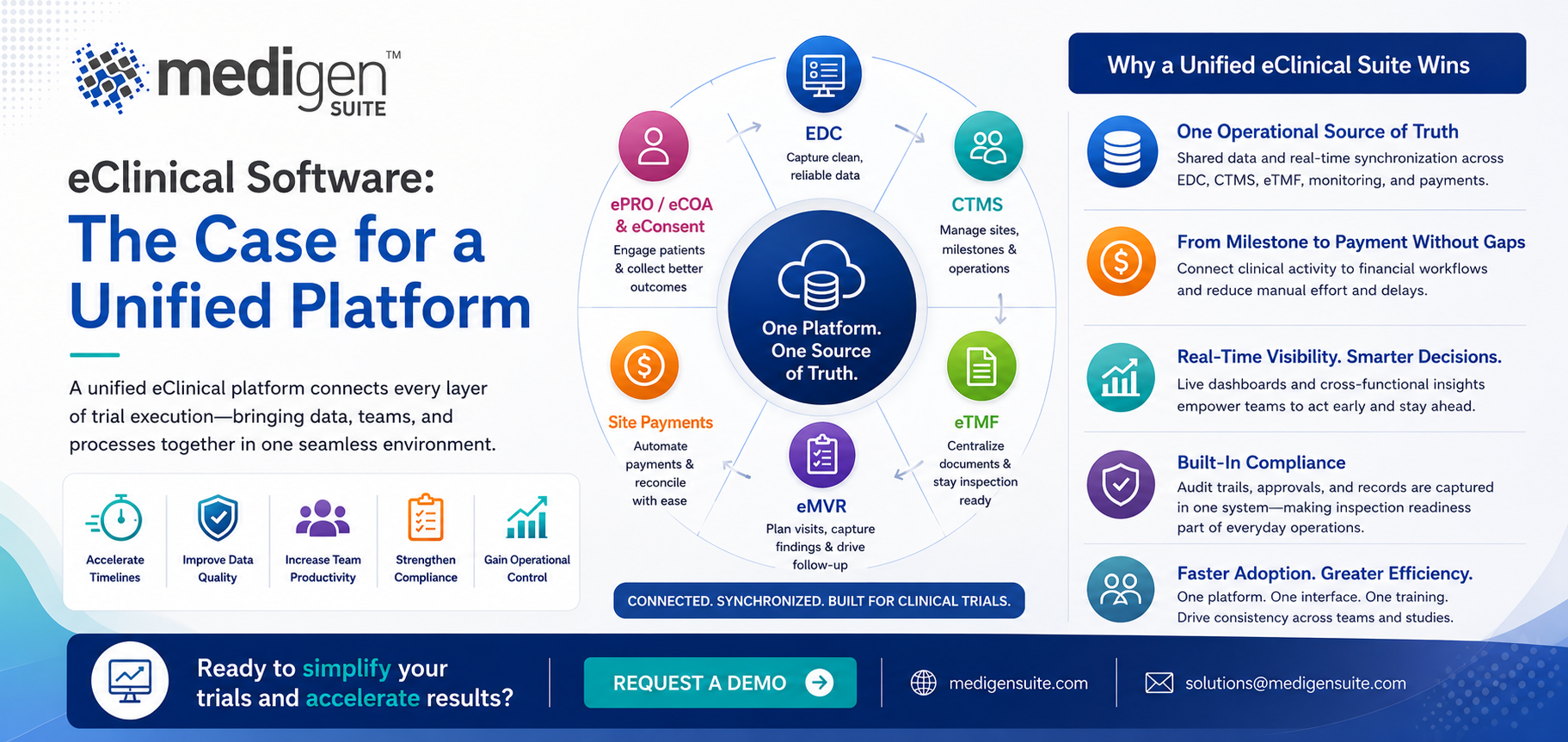
An eClinical platform is an integrated digital solution designed to support the full lifecycle of clinical trial execution — from study start-up and data collection through monitoring, document management, site payments, and close-out. A unified eClinical suite goes further than individual tools by connecting these functions within a shared architecture, common data model and synchronized workflows.
The core components of a modern eClinical solution typically include:
- Electronic Data Capture (EDC) — structured eCRF design, data entry, query management, and audit trails
- Clinical Trial Management System (CTMS) — milestone tracking, site management, operational oversight, and delegation management
- Electronic Trial Master File (eTMF) — centralized document management, version control, and inspection readiness
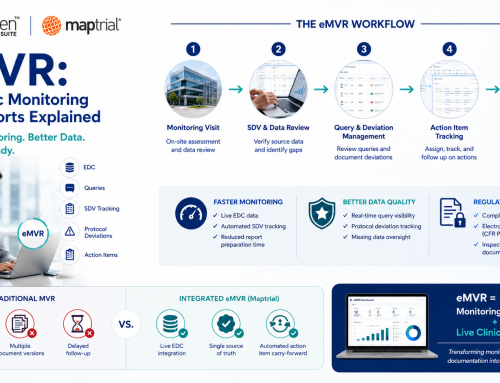
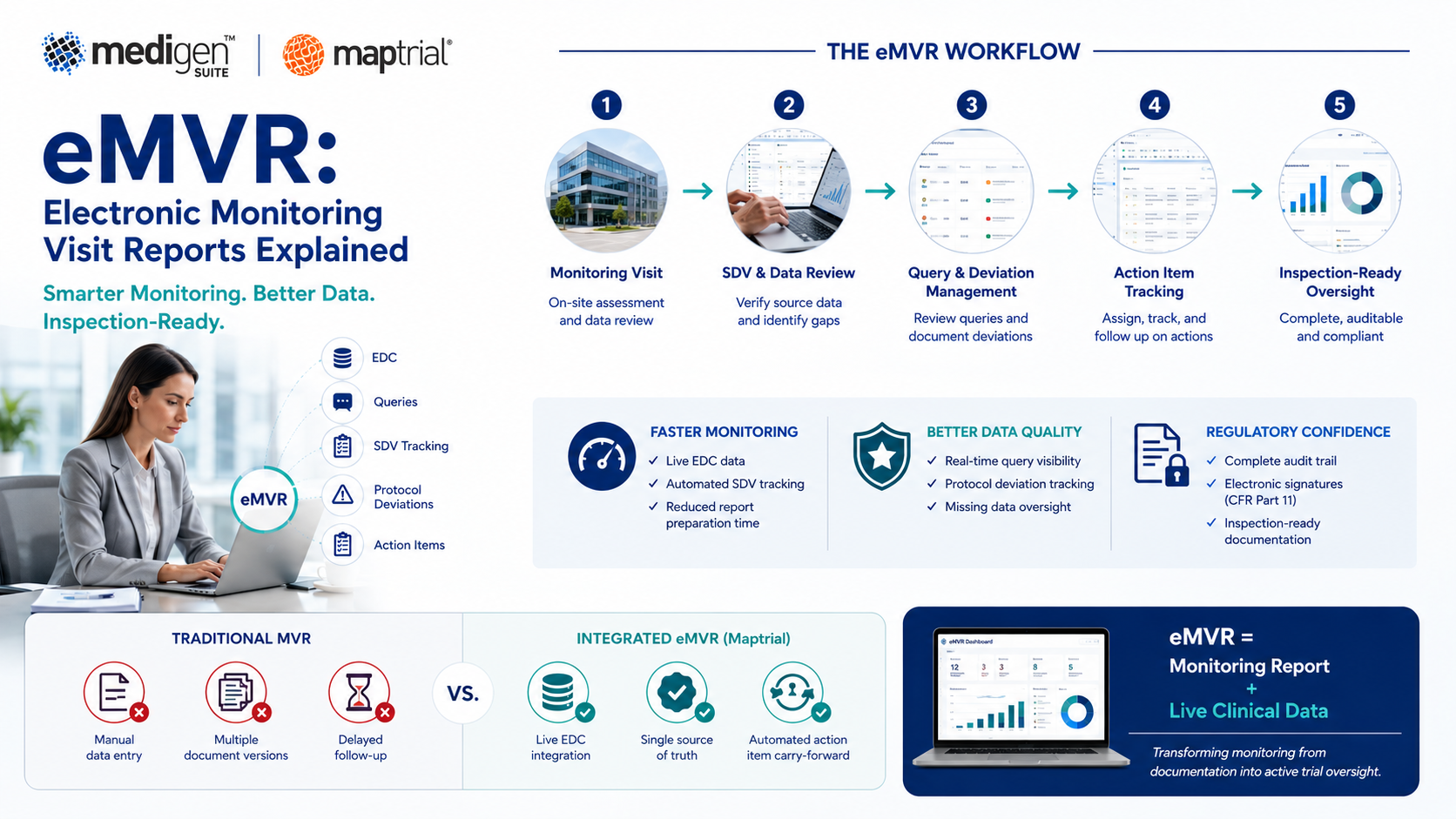
- Electronic Monitoring (eMVR) — monitoring visit planning, digital visit reports, and follow-up action tracking
- Site Payments — budget configuration, payment scheduling, invoice workflows, and financial reconciliation
- ePRO / eCOA and eConsent — patient-reported outcomes and digital consent management
Each of these capabilities delivers value on its own. Together, within a unified eClinical platform, they deliver something greater than the sum of their parts.
The Opportunity in Connected eClinical Tools
Organizations that have moved to a unified approach consistently report the same benefits: less time spent reconciling information across systems, stronger data quality, faster study start-up, and a more confident posture at inspection time. Understanding why requires a closer look at what changes when eClinical tools are genuinely connected.
Data flows automatically across the trial. When enrollment events captured in your EDC instantly update CTMS milestones, when monitoring findings feed directly into the eTMF, and when site activity triggers payment workflows without manual intervention, teams spend less time managing information and more time acting on it.
Every team works from the same picture. A unified eClinical platform gives clinical operations, data management, monitoring, and finance teams a shared, real-time view of study status. Project managers gain instant visibility into where milestones stand, where risks are emerging, and where action is needed — without needing to consolidate reports from multiple systems.
Compliance becomes easier to demonstrate. When audit trails, document approvals, monitoring records, and delegation logs are all maintained within a single system, compiling inspection-ready documentation is a natural output of day-to-day operations rather than a standalone project.
Teams get up to speed faster. A single platform means a single interface, a single training pathway, and a single set of validation and qualification documentation. For CROs and sponsors managing multiple concurrent studies, this consistency across teams and sites adds up to significant time and cost savings.
Why a Unified eClinical Suite Wins
A unified eClinical solution delivers these benefits by design — built into the architecture from the ground up, not achieved through manual workarounds.
One Operational Source of Truth
When your EDC, CTMS, eTMF, monitoring tools, and payment module share a common data model, study configuration flows automatically across the entire system. Sites activated in the CTMS are immediately available in the monitoring module. Enrollment events captured in the EDC automatically update operational milestones. Document approvals in the eTMF are synchronized with monitoring records in real time.
This is what a genuinely integrated eClinical platform delivers: systems that are architecturally connected, with real-time data synchronization across every function.
From Milestone to Payment Without Gaps
One of the most tangible advantages of a unified eClinical suite is the ability to connect clinical activity directly to financial workflows. When investigator payment schedules are configured within the same environment as operational milestones and EDC data, completed visits and captured data can trigger payment calculations automatically — accelerating the payment cycle for sites, reducing manual effort, and giving finance teams accurate, real-time budget visibility.
Monitoring That Connects to the Whole Trial
In a unified eClinical platform, monitoring visit reports are linked directly to site-level milestones. Follow-up actions are tracked persistently across visits, escalated through configurable workflows, and resolved with full traceability. Training records for CRAs and site personnel sit alongside the monitoring documentation they relate to — making it straightforward to demonstrate team readiness at any point in the study.
When open issues carry forward automatically into subsequent visit reports, and monitoring status is visible in real time across shared operational dashboards, clinical operations teams gain the kind of oversight that drives genuine quality improvement.
Inspection Readiness Built In from Day One
A modern eClinical suite maintains a common audit trail across all modules, enforces 21 CFR Part 11–compliant electronic signatures consistently, and structures document workflows so that version control, approval history, and delegation records are automatically maintained. Teams that operate this way find that inspection readiness is simply the natural state of their documentation — not something that requires a project in its own right.
Faster Study Start-Up and Configuration
When study configuration is shared across modules, the work of building a study happens once. Protocol information, site lists, country structures, user roles, and delegation assignments flow across EDC, CTMS, and monitoring environments from a single source. For organizations running multiple concurrent studies, this shared configuration model means faster build times, greater consistency, and the ability to deploy studies at scale without multiplying effort.
What to Look for in eClinical Software
It is worth understanding the difference between a genuinely unified eClinical solution and a collection of separately built tools offered together. A true platform is built on a shared architecture from the ground up — common authentication, shared master data for studies, sites, and users, synchronized workflows, and a consistent compliance framework across all modules. This architectural foundation is what makes real-time synchronization, consistent audit trails, and reliable automated workflows possible.
When evaluating eClinical software, the questions that matter most are: Does the platform share a common data model across all modules? Can study configuration and user management flow centrally across functions? Is compliance built into the system by design? Can it scale across multiple studies with different protocol configurations? Strong answers to these questions are the hallmark of a platform built to last.
Medigen Suite: A Unified eClinical Platform Built for End-to-End Trial Execution
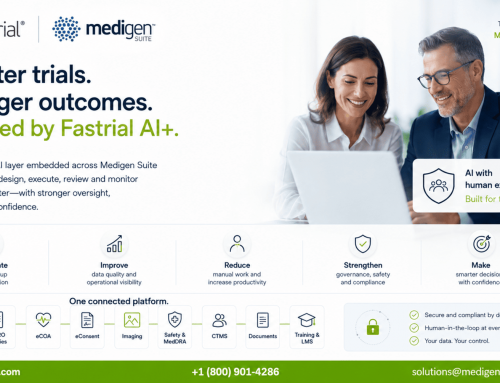
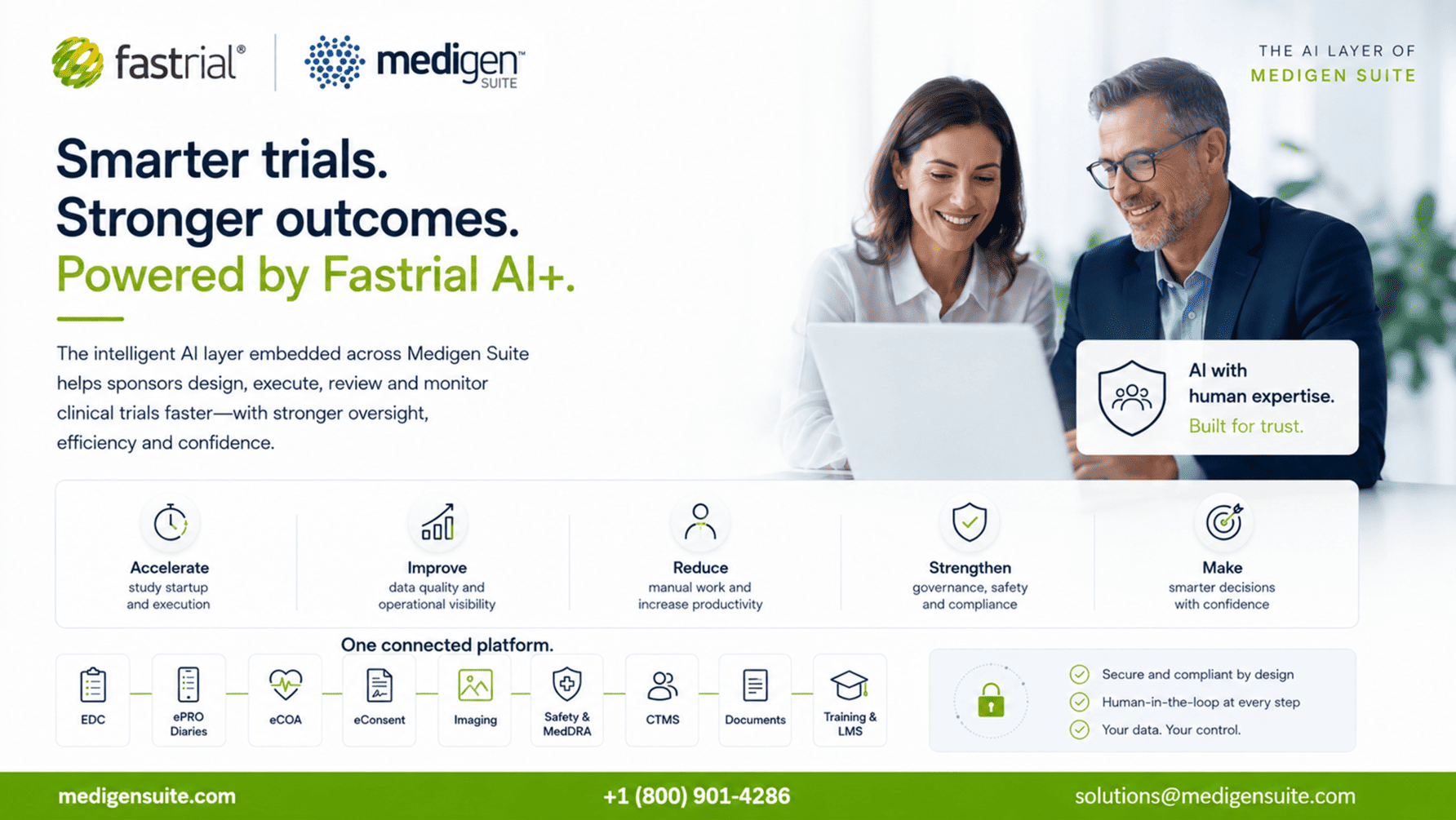
Medigen Suite is Meditrial’s integrated eClinical software ecosystem, purpose-built to bring every layer of clinical trial execution into a single, coherent environment. Designed for Sponsors and CROs running complex, multi-country, multi-site studies, the Suite combines the power of an advanced EDC platform with a fully integrated CTMS, monitoring solution, eTMF, and patient-facing tools — all operating from a shared architecture and synchronized in real time.
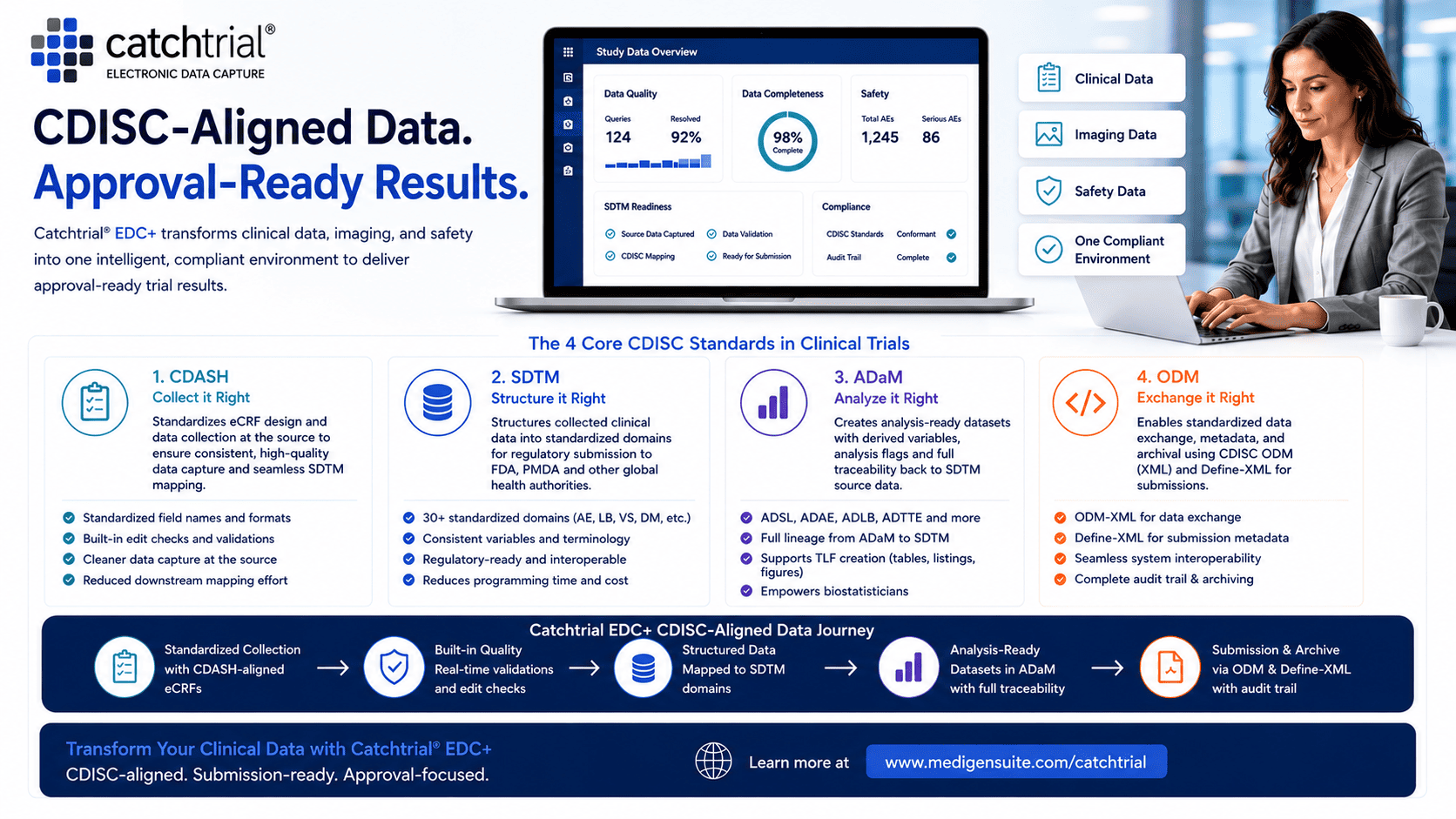
Catchtrial EDC — Clinical Data at the Core
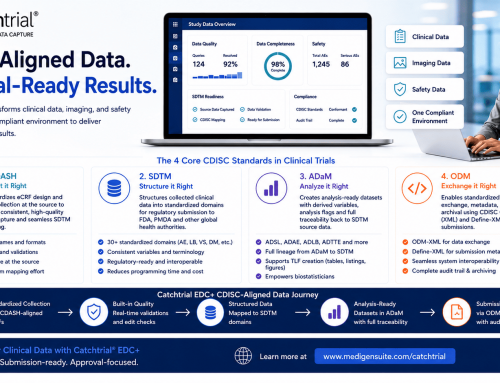
At the heart of the Medigen Suite is Catchtrial EDC, a configurable, cloud-enabled electronic data capture platform with over 15 years of global deployment across hundreds of clinical sites. Catchtrial is built to handle the full complexity of modern drug and device trials, including:
- Structured eCRF design with real-time edit checks and full audit trail
- Centralized imaging management with DICOM ingestion, anonymization, and web-based review
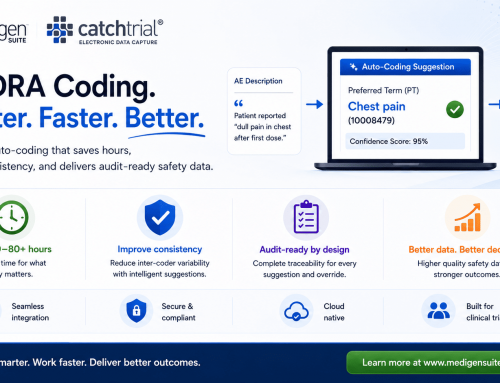
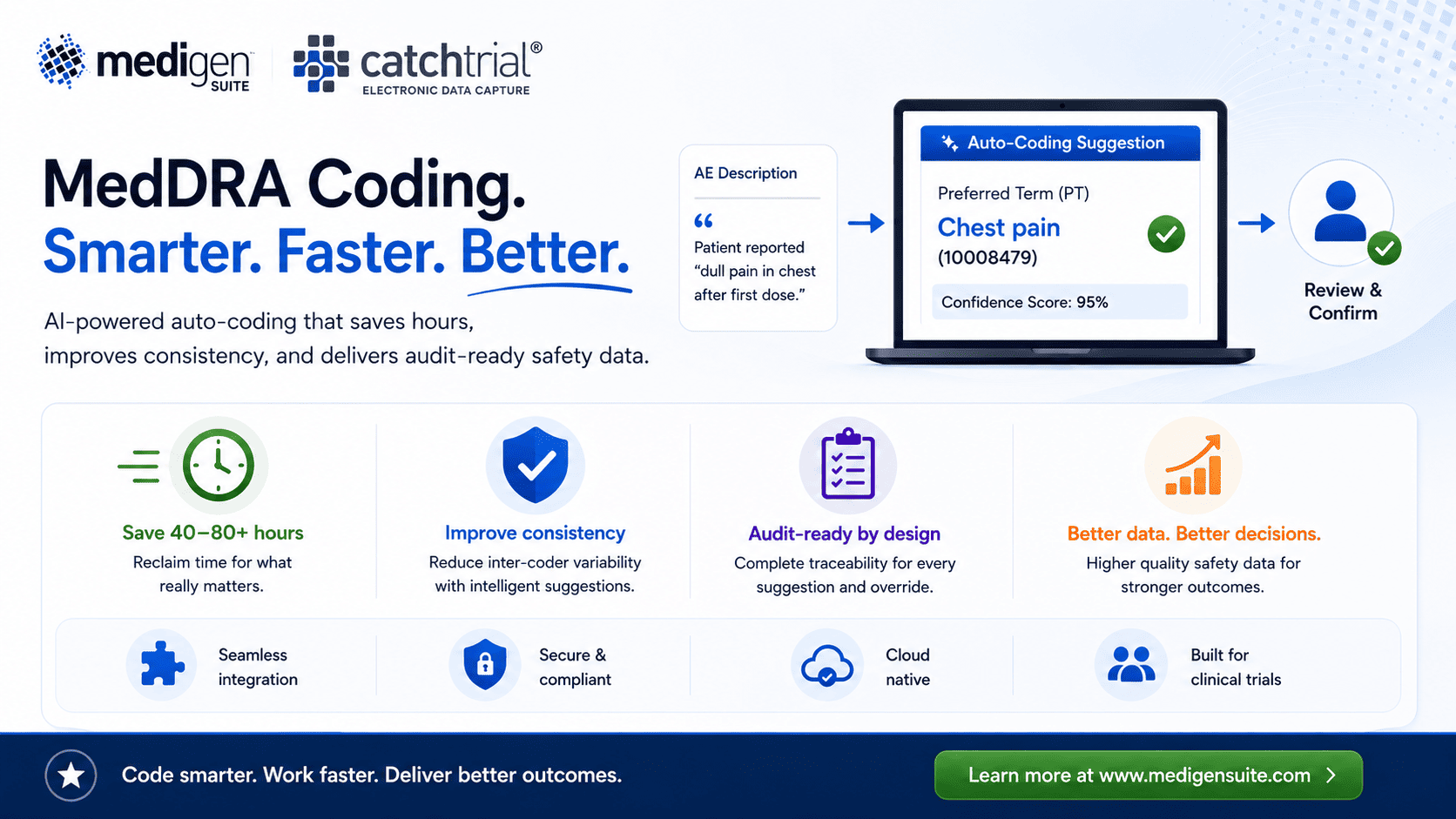
- Safety event capture, CEC workflows, multi-member adjudication, and MedDRA coding
- ePRO, eDiary, and eConsent for patient-facing data collection
- Decentralized and hybrid trial (DCT) capabilities
- Randomization, device management, and real-time reporting
Catchtrial is equally at home in early feasibility studies and large-scale multicenter trials — with the flexibility to deploy standalone or fully connected across the Medigen Suite ecosystem.
Maptrial CTMS — Operational Excellence Across the Full Study Lifecycle
Maptrial CTMS is the operational backbone of the Medigen Suite, delivering centralized oversight of every aspect of study execution. Maptrial connects operational management directly to clinical data, monitoring workflows, document control, and financial processes — giving teams a complete, real-time view of trial performance. Key capabilities include:
- Study, country, and site planning with milestone tracking at all levels
- Interactive Gantt charts and automated variance analysis to surface timeline opportunities early
- Trial team and delegation log management across the study hierarchy
- Regulatory and ethics submission tracking across multiple countries
- Digital monitoring visit reporting (eMVR) with electronic signatures, follow-up action management, and configurable approval workflows
- eTMF with version-controlled document management, quality control, and inspection-ready audit trails
- Site payments with configurable budgets, automated invoice generation, and full payment reconciliation
- Investigational product tracking covering receipt, dispensing, returns, and accountability
When Maptrial CTMS is connected to Catchtrial EDC, operational milestones update automatically based on clinical activity — keeping data management and operations teams perfectly aligned without manual coordination.
A Shared Architecture That Makes Unification Real
What makes Medigen Suite a genuinely unified eClinical solution is its shared platform foundation:
- Single Sign-On (SSO) across all modules for seamless, secure user access
- Common master data for studies, sites, and users synchronized across EDC, CTMS, and monitoring
- Shared audit trail and security framework supporting 21 CFR Part 11 compliance, GDPR, and ISO 14155 across the entire suite
- Centralized analytics and dashboards drawing from operational, clinical, and financial data in one unified view
- Cloud-hosted on Google Cloud Platform with AES-256 encryption, TLS in transit, and Confidential Computing for sensitive workloads
Medigen Suite is validated under a GAMP 5 framework and built on a microservices architecture that supports both modular adoption and full-suite deployment — so organizations can start with the capabilities they need today and grow confidently from there.
The Future of Clinical Operations Is Unified
The organizations executing the most efficient, highest-quality clinical trials today share a common characteristic: they have moved beyond fragmented toolsets and invested in platforms that give every team a connected, real-time view of every study. Technology is no longer a back-office function in clinical research — it is the infrastructure on which competitive advantage is built.
Medigen Suite is designed for exactly this moment. From first patient enrolled to database lock, from site activation to final payment, from monitoring visit report to inspection-ready eTMF — it is the unified eClinical solution for Sponsors and CROs ready to operate at their full potential.
Ready to see Medigen Suite in action? Explore how Catchtrial EDC, Maptrial CTMS, and the full suite of connected modules can elevate your trial operations. Request a demo today.