
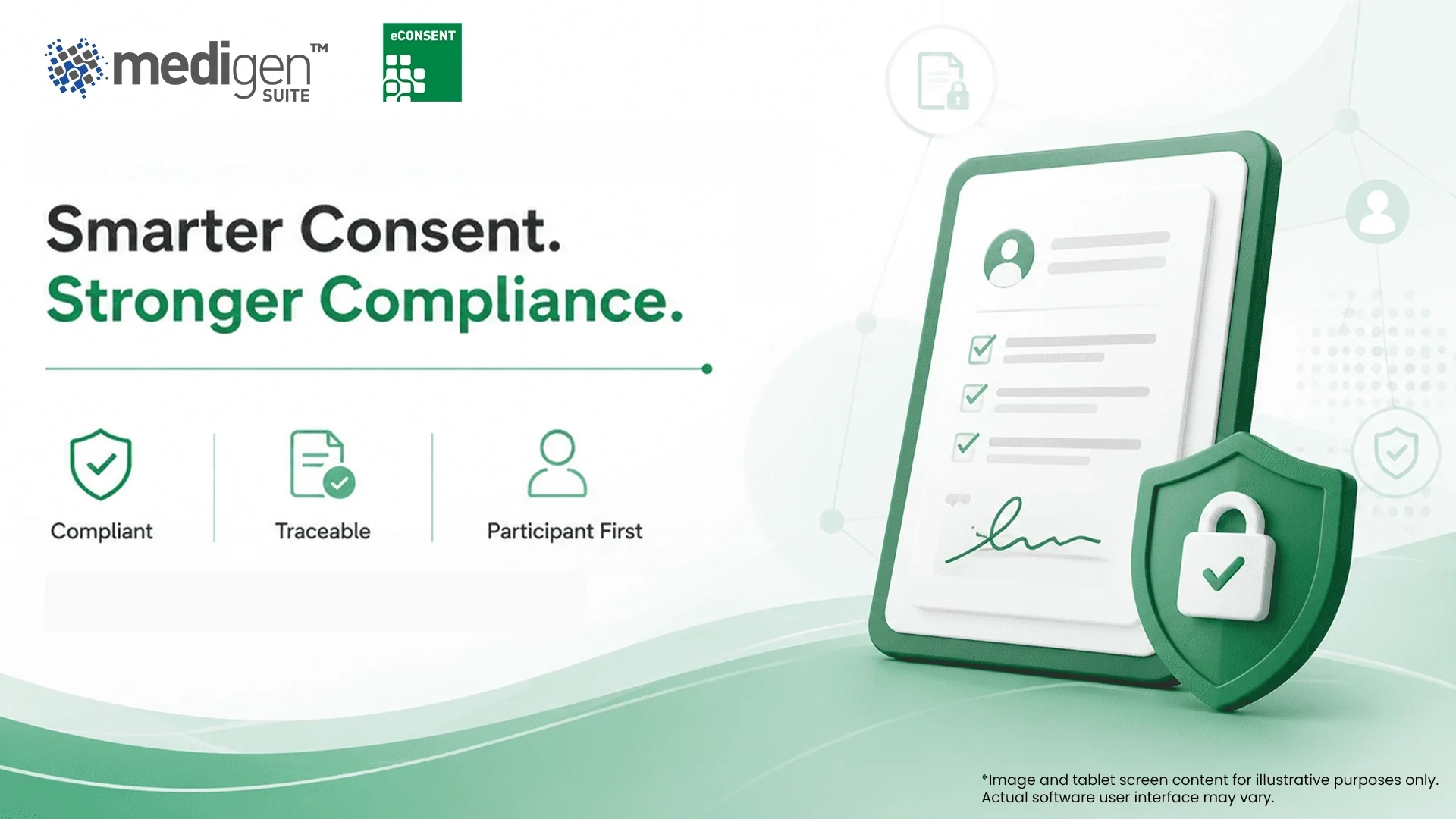
Clinical trials are moving fast toward decentralized and hybrid models, and paper consent forms simply can’t keep up. Participants now expect to review, discuss, and sign consent documents from their phone or tablet, sometimes without ever stepping into a site. That shift brings real advantages for enrollment speed and patient experience, but it also raises the compliance bar. A digital consent process that is not built for regulatory scrutiny can create more risk than the paper it replaced.
If you are evaluating an eConsent platform, here’s what actually matters, and what to look for before you commit.
A missed signature, an outdated consent version signed in error, an audit trail with a gap in it. These are not hypothetical problems. They are the findings that show up in monitoring visit reports and inspection letters, and they are almost always traceable back to a consent process that was not built to withstand scrutiny. As decentralized and hybrid trial designs become the norm rather than the exception, sponsors and CROs are re-evaluating their consent technology with a harder question in mind: will this hold up when someone checks?
The Core Compliance Features to Look For
Regulatory compliance forms the foundation of any trustworthy eConsent platform. In an environment where FDA, EMA and other authorities routinely inspect consent processes, the technology must be engineered from the ground up for regulated use.
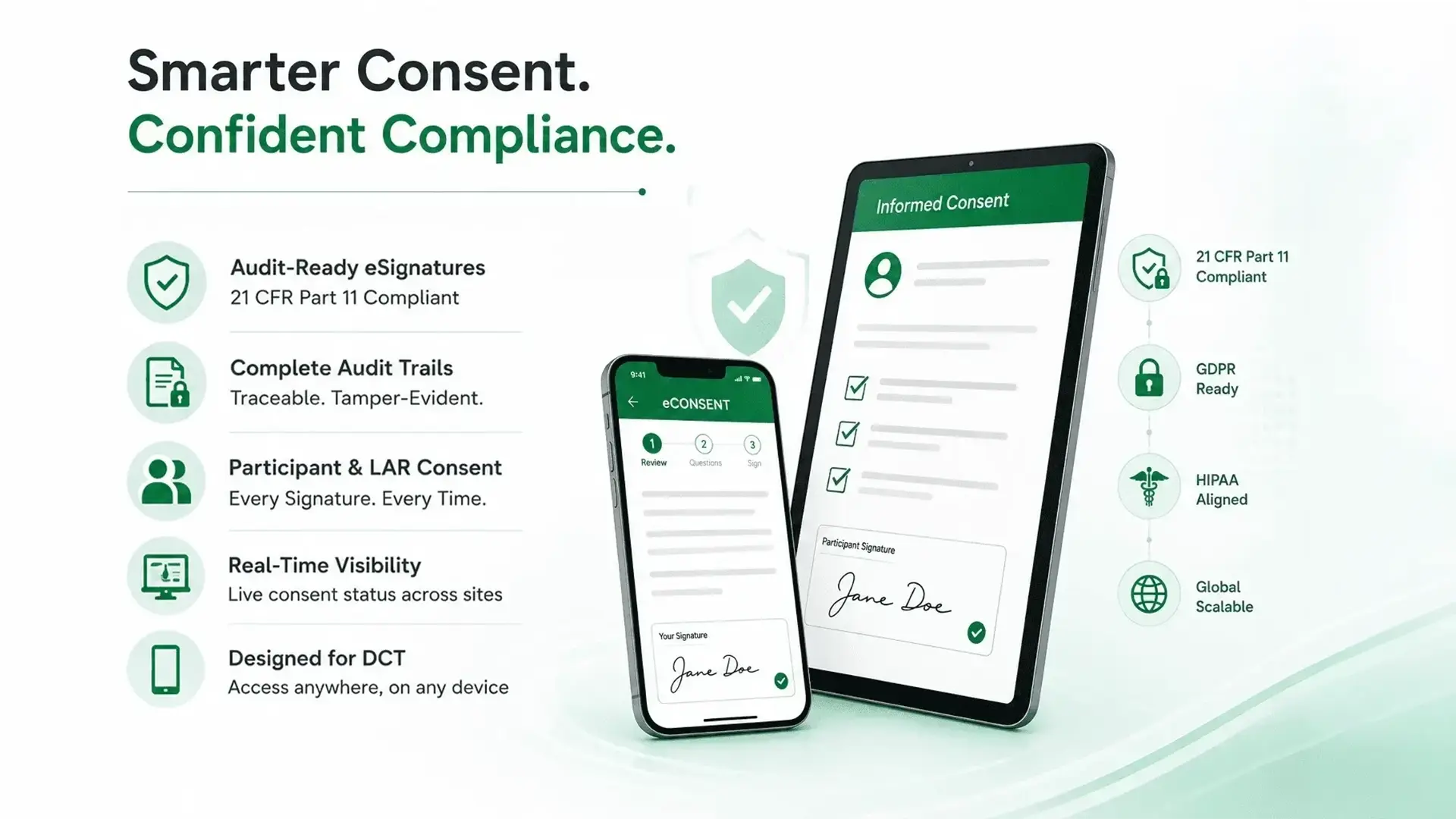
Regulatory alignment with 21 CFR Part 11, GDPR and HIPAA. Any credible platform must explicitly demonstrate how it satisfies these key frameworks. 21 CFR Part 11 sets requirements for electronic records and signatures, including the need for secure, computer-generated, time-stamped audit trails that record the creation, modification, and deletion of records. GDPR and HIPAA add layers of data protection, privacy controls, and patient rights management.
A key concern appears when a provider cannot clearly articulate how their audit trail meets Part 11 technical controls or how data residency and processing align with regional privacy laws. Sponsors and CROs should request detailed compliance documentation, including validation packages and third-party audit reports, during the evaluation process.
Audit-ready eSignatures. A simple click-to-sign function alone is generally insufficient for regulated clinical trials unless it is supported by the authentication, audit trail, and record-linkage controls required under applicable regulations. Look for platforms that implement multi-factor authentication (MFA) and, where appropriate, biometric verification (e.g., fingerprint or facial recognition), along with cryptographic controls that bind the signature to the specific document version. These controls help provide reliable evidence that informed consent was obtained and documented appropriately.
Support for legally authorized representatives (LARs). Not every participant can consent for themselves. Pediatric studies, cognitive impairment and emergency research all require consent from a legally authorized representative. Your eConsent platform needs to capture and document LAR consent with the same rigor as participant consent, not as an afterthought. That means a distinct signer identity, a clear record of the relationship to the participant and the same audit-trail standards applied to every other signature in the study.
Real-time tracking and complete audit trails. Visibility is power in clinical operations. Modern platforms should provide centralized, real-time dashboards showing consent status across all sites and participants: who has consented, to which version, any pending actions, and completion rates. A real-time, centralized view can improve monitoring efficiency and help identify consent gaps earlier.
Cross-Platform Accessibility and Inclusivity Decentralized trials succeed only when technology meets participants where they are. The platform must deliver a consistent, user-friendly experience across iOS and Android devices, smartphones, tablets and desktop browsers. It should include features supporting limited digital literacy, offline capabilities where feasible and accessibility standards (such as WCAG compliance) to avoid excluding participants.
A platform that performs well only under ideal conditions risks driving some participants back to paper workarounds, undermining data consistency and the very goals of digital transformation.
Why Compliance Matters for Trial Outcomes
Strong compliance features are more than audit safeguards—they drive operational performance. A well-designed eConsent platform can help accelerate screening and enrollment, reduce consent-related screen failures, and maintain inspection readiness throughout the study lifecycle.
Consent delays remain one of the most avoidable sources of timeline slippage. Remote capabilities eliminate unnecessary in-person visits, allowing sponsors to track consent turnaround time as a key operational metric.
Equally important is participant comprehension. In remote settings, the platform must support clear navigation, easy access to information, and mechanisms for questions—ensuring consent is both technically valid and ethically sound. Regulators increasingly examine the quality of the consent process, not just the presence of a signature.
Comparing Consent Approaches
| Capability | Paper Consent | General-Purpose e-Signature Solution | Purpose-Built eConsent Platform |
| Audit trail for 21 CFR Part 11 | Manual, reconstructed | Partial, often generic | Built-in, automated |
| LAR / representative consent support | Manual documentation | Rarely supported | Native workflow |
| Version control across sites | High risk of error | Limited | Centralized and automated |
| Remote and mobile capture | Not supported | Sometimes | Designed for DCT and hybrid use |
| Real-time consent status visibility | None | Limited | Live dashboard tracking |
General-purpose e-signature tools may handle basic signing but frequently fall short on the full chain of custody, representative consent, and version governance required in regulated clinical trials. Purpose-built eConsent software closes these gaps by design, rather than through workarounds layered on top of a generic signing tool.
How Catchtrial eConsent Delivers
Catchtrial eConsent, part of Medigen Suite, is built around exactly these requirements:
-
- Audit-ready e-signatures secured with MFA and, where configured, biometric verification
- A complete audit trail meeting 21 CFR Part 11, GDPR, and HIPAA requirements
- Consent capture for both participants and their legally authorized representatives
- Remote, telemedicine-inspired consent that works across iOS and Android, supporting decentralized and hybrid trial designs
Because it is part of Medigen Suite, Catchtrial eConsent also connects with Catchtrial EDC+, so consent data flows into your broader clinical data ecosystem without manual re-entry or disconnected systems.
Choosing the Right Approach for Your Trial
The optimal eConsent platform depends as much on study design as it does on therapeutic area. Before making a selection, sponsors and CROs should carefully evaluate whether the protocol requires robust LAR consent workflows, how many sites and countries must maintain harmonized consent versions, the extent of remote or hybrid participation, and the level of real-time visibility needed into participant consent status. These operational considerations help ensure the platform can support the study throughout its lifecycle while minimizing administrative burden and compliance risk.
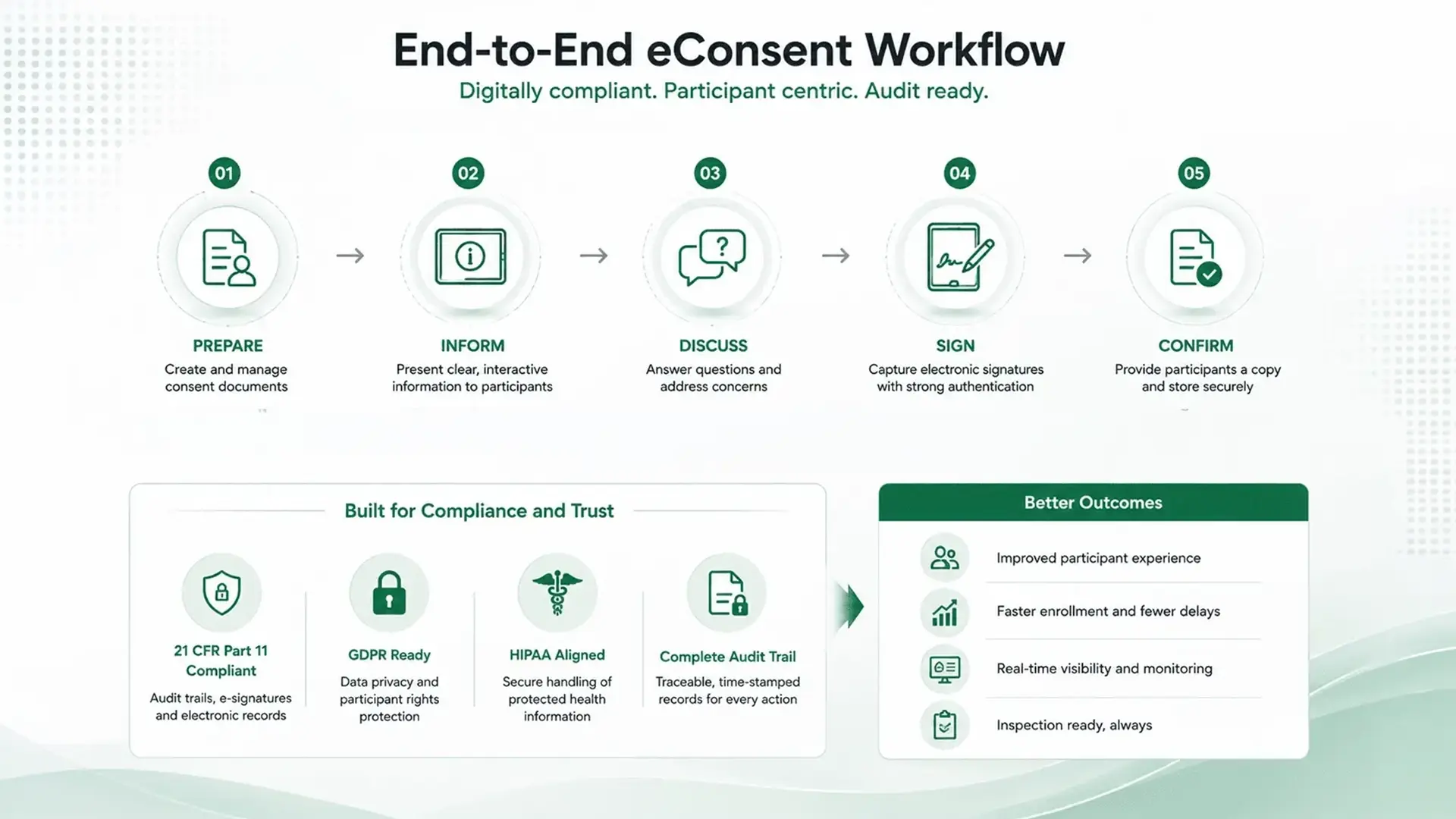
Catchtrial eConsent is designed with features that support regulatory compliance at its core. It includes a complete, tamper-evident audit trail and e-signatures reinforced by multi-factor authentication (MFA) and biometric verification, providing the evidentiary strength demanded during inspections.
More broadly, any effective eConsent solution must operate in accordance with ICH GCP principles, which safeguard participant rights, safety, and data integrity throughout the trial lifecycle. When evaluating platforms, sponsors and CROs should insist on specific details rather than accepting vague statements such as “compliant by design.”
For studies conducted in Europe, sponsors should also consider national implementation requirements for electronic informed consent, as expectations may vary between Member States and ethics committees despite the broader framework established by the EU Clinical Trials Regulation and ICH E6(R3).
In procurement conversations, ask targeted questions: What exactly does the audit trail capture? Is e-signature authentication truly multi-factor? How is version control maintained when protocol amendments occur mid-study? A vendor that provides clear, detailed answers demonstrates that the platform was purpose-built for regulated clinical trials, rather than adapted from a generic document-signing tool.
If you are comparing eConsent platforms, the questions above are a good place to start with any vendor. To see how Catchtrial eConsent handles compliance in practice, request a demo or talk to our team today.
Table of Contents
Latest Articles
21 CFR Part 11 password requirements: what the regulation actually says
A 90-day password change is not a 21 CFR [...]

Clinical trial software for the connected study stack
Clinical trials are generating more data from more sources, [...]

A practical guide to the main types of clinical trials
The type of clinical trial you run shapes almost [...]
This article provides general information and does not constitute regulatory, legal, clinical, or compliance advice. Requirements and appropriate processes may vary by study, product, jurisdiction, and organization. Medigen Suite functionality should be used in accordance with applicable regulations, study documentation, and internal procedures.