
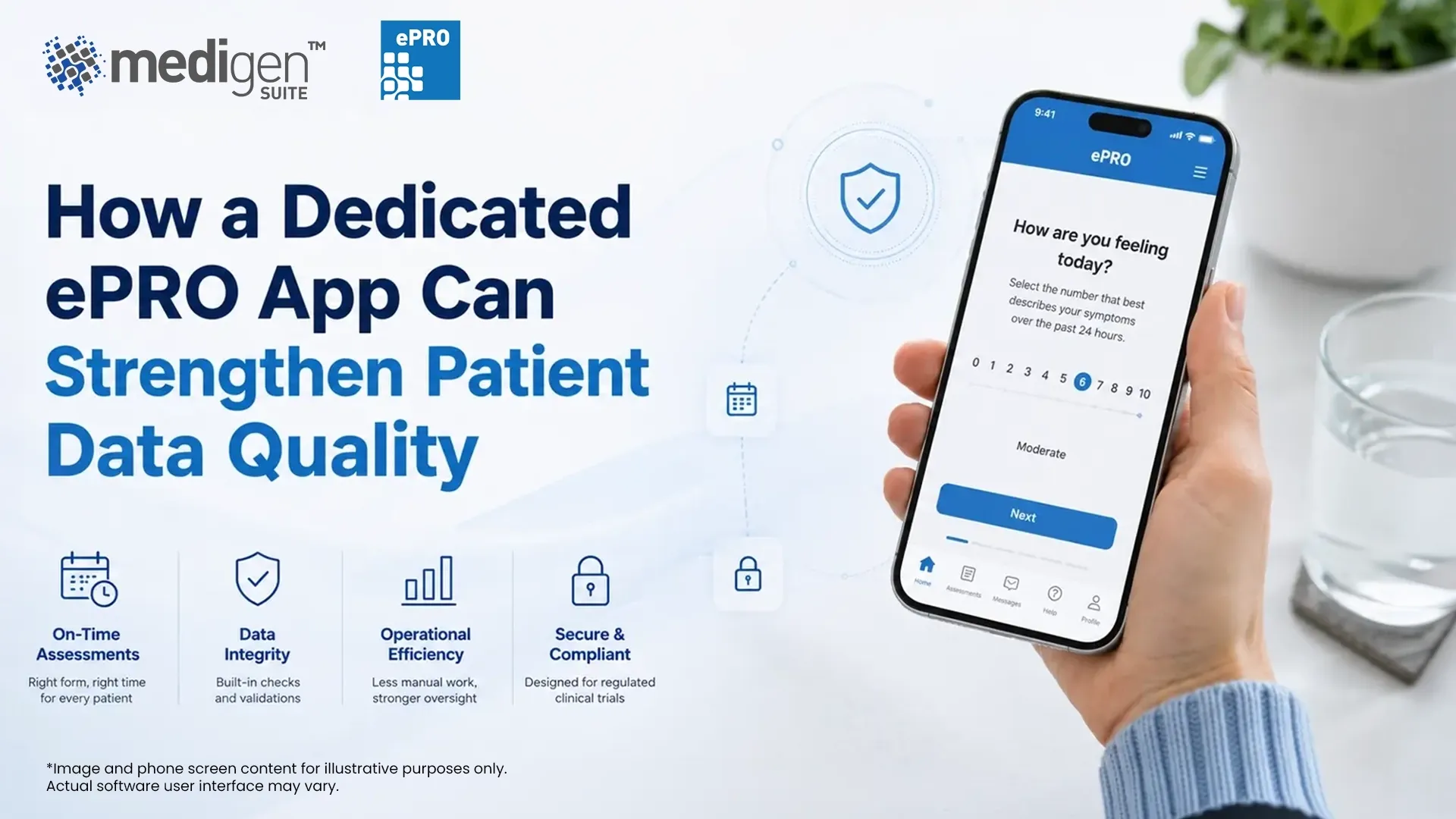
ePRO Apps Deliver Cleaner Patient Reported Outcome Data
Electronic patient reported outcomes, or ePRO, have become a core data source in modern clinical trials, capturing symptom severity, quality of life, and treatment tolerability directly from the patient’s perspective. As ePRO in clinical trials increasingly supports efficacy and safety conclusions, the tools used to collect it matter more than ever. A dedicated ePRO app, purpose built for this task, can offer a meaningfully different experience than repurposed consumer software or paper-based diaries.
When people talk about “ePRO data quality,” they usually mean a few different things at once: did the patient complete the questionnaire, did they do it on time, were their answers consistent, and can every entry be traced back to exactly when and how it was recorded. Sponsors, CROs, and site staff all share responsibility for this, often while managing several other priorities across a busy trial portfolio. Understanding where this data quality tends to break down, and how a dedicated app can help, is a useful starting point for teams assessing their current approach.
Why ePRO Data Quality Matters for Trial Outcomes
Patient-reported outcomes increasingly inform regulatory submissions, particularly in therapeutic areas where symptom burden or quality of life serves as a primary or secondary endpoint. When ePRO data are incomplete, delayed, or inconsistent, they can complicate statistical analysis and may raise questions during regulatory review. As trials become more complex, with more frequent assessments, increasingly diverse patient populations, and more instruments per protocol, the tools supporting data collection need to evolve accordingly.
A well designed ePRO app can address several of these challenges at once, making it easier for patients to respond accurately, on time, and in a format that preserves data integrity from entry through to analysis.
Patient Experience Shapes Response Quality
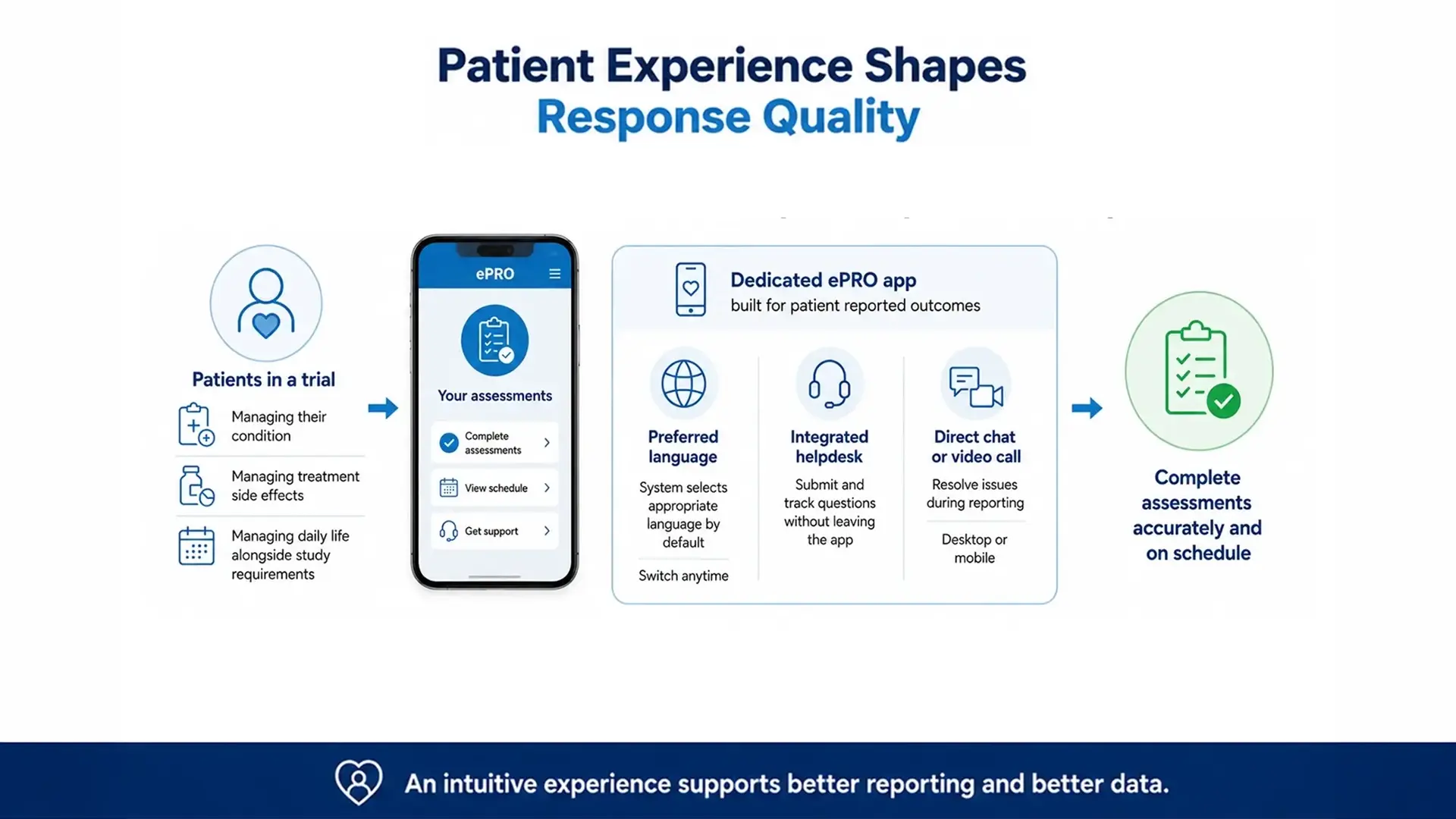
Patients participating in a trial are often managing their condition, treatment side effects, and daily life alongside study requirements. The easier and more intuitive the reporting experience, the more likely a patient is to complete assessments accurately and on schedule.
A dedicated ePRO app, built specifically for patient reported outcomes rather than adapted from a general purpose survey tool, can support this in practical ways. Instructions can be provided in the patient’s preferred language, with the system selecting the appropriate language by default while allowing users to switch languages at any time. Support is also built into the experience itself: an integrated helpdesk lets patients submit and track questions without leaving the app, and direct chat or video call functionality can help resolve issues that arise during reporting, from either desktop or mobile devices.
Scheduling and Recall Bias
Ensuring that patients complete questionnaires within the protocol-defined timeframe is a common challenge in ePRO data collection. Many assessments ask patients to report how they feel at a specific moment or over a defined window, such as the previous 24 hours. When a questionnaire is completed hours or days later, responses may be influenced by recall bias, potentially affecting the accuracy and consistency of the data.
A dedicated ePRO app can help address this challenge by controlling exactly when each questionnaire becomes available to the patient. Instead of relying on a static link or a paper diary, forms can be scheduled to appear at the specific times the protocol requires, whether that is daily, weekly, monthly, or a recurring slot such as every Monday morning. The patient is prompted at the intended moment rather than left to remember on their own.
Once a form is submitted, standardized questionnaire scores can be calculated automatically, so the resulting data are both timely and consistently scored, which can support stronger data quality and a more defensible dataset at review.
Site Burden and Oversight
Site staff play an important role in supporting patients through the ePRO process, from onboarding and device training to monitoring completion and following up on missed assessments. As trials add more electronic patient reported outcomes measures, this oversight workload can grow, particularly across multi-site or multi-region studies.
In a typical protocol, different eCRFs and visits apply at different stages, a baseline visit, a week 4 follow up, an end of study form, and so on. Someone has to make sure each patient only sees the forms relevant to where they currently are in the study, and that new forms unlock as the patient moves forward. Done manually, this tracking falls on site staff, who have to remember or check which forms apply to which patient at any given time. Dynamic form access handles this automatically: as a patient progresses through the study timeline, the system reveals the eCRFs and visits that apply to their current stage and keeps earlier or later ones hidden until relevant, removing a layer of manual bookkeeping from the site’s workload.
Configurable edit checks work in a similar spirit for data entry. Rather than a monitor discovering an inconsistent or out of range entry, such as a value that falls outside the plausible clinical range, weeks later during a scheduled visit, the system can flag it the moment it is entered, so it gets corrected close to the source rather than sitting unresolved until the next review cycle.
Comparing Collection Approaches
Teams generally choose between paper diaries, general purpose survey or messaging tools adapted for the purpose, and dedicated ePRO applications. As the table below shows, a dedicated ePRO app is built specifically to meet the data quality and compliance demands of regulated trials, in ways paper and general-purpose tools were not designed to.
| Paper diaries | General-purpose survey or messaging tools | Dedicated ePRO app | |
| Data quality considerations | Prone to recall bias and transcription error; no timestamp validation | Variable; not designed for regulated data capture | Structured for protocol-driven, scheduled entry with automated scoring |
| Compliance considerations | No electronic audit trail; harder to demonstrate 21 CFR Part 11 alignment | May lack built-in electronic signature and audit trail features suited to clinical trials | Designed with regulated data capture in mind, including 2FA and access controls |
| Operational effort | High; manual data entry and reconciliation | Moderate; often requires workarounds | Lower once deployed, with ongoing site support |
For protocols where patient reported outcomes carry real analytical weight, a dedicated ePRO app is positioned to reduce the burden paper and general purpose tools tend to add downstream, from queries and rework to compliance gaps at audit.
How Catchtrial ePRO Supports Data Quality
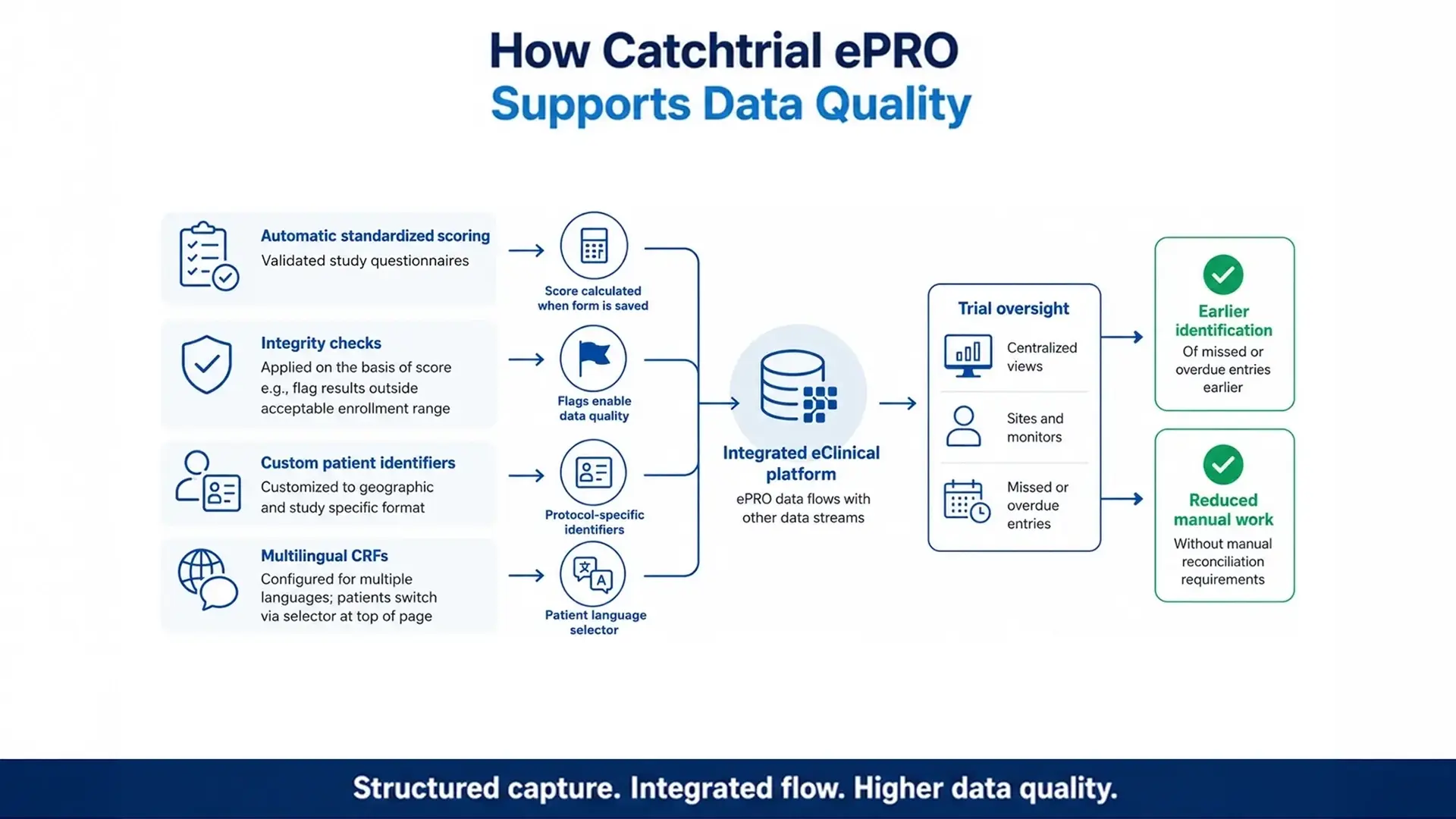
Catchtrial ePRO, part of Catchtrial Apps+ within Medigen Suite, is designed to help sponsors and CROs capture patient reported outcomes with structure and consistency. Standardized questionnaire scores, such as MLHF, SF-36, Beck Depression, or KOOS, can be calculated automatically once a form is saved, with the total optionally displayed in a separate form and integrity checks applied on the basis of that score, for example to flag a patient whose result falls outside an acceptable enrollment range.
Patient identifiers can be customized to match the geographic and study specific format each protocol requires, and the CRF itself can be configured to support multiple languages, with patients switching between them from a selector at the top of the page. Because Catchtrial ePRO is part of an integrated eClinical platform, patient reported outcome data flows through to broader trial oversight views alongside other data streams, which can help sites and monitors identify missed or overdue entries earlier, without the manual reconciliation that separate, disconnected tools can require.
Regulatory and Compliance Considerations
Patient reported outcome data collected electronically is generally expected to meet the same standards of data integrity as other electronic trial data, including alignment with 21 CFR Part 11 for electronic records and electronic signatures, and consideration of GDPR where applicable to patient data handling in relevant jurisdictions. ICH GCP principles around data traceability and audit trails also apply to ePRO collection.
Two-factor authentication is supported for all user accounts, adding a layer of protection for sensitive study data, and electronic informed consent can be collected within the same environment, supporting a workflow designed to align with relevant international regulatory requirements.
Choosing the Right Approach for Your Protocol
The right ePRO collection method depends on the specific requirements of the study. Teams should consider how often patients need to report information, whether the patient population is comfortable using digital tools, and how closely sponsors need to monitor completion and data quality.
When patient-reported outcomes are an important part of the study analysis, a dedicated ePRO app is generally the strongest option because it provides the structure, compliance features, and study oversight that paper diaries and general-purpose tools may lack.
If your team is evaluating how a purpose-built app can support your electronic patient reported outcomes strategy, visit the Catchtrial ePRO page within Medigen Suite or request a demo to see how it fits alongside your existing eClinical workflows.
Sources
- U.S. Food and Drug Administration, 21 CFR Part 11, Electronic Records; Electronic Signatures, eCFR (ecfr.gov)
- ICH E6(R3) Guideline on Good Clinical Practice, Step 5, European Medicines Agency (ema.europa.eu)
- McMullan et al., “Development and usability testing of an electronic patient-reported outcome (ePRO) solution for patients with inflammatory diseases in an ATMP basket trial,” Journal of Patient-Reported Outcomes, 2023 (PMC/NCBI)
Table of Contents
Latest Articles
21 CFR Part 11 password requirements: what the regulation actually says
A 90-day password change is not a 21 CFR [...]

Clinical trial software for the connected study stack
Clinical trials are generating more data from more sources, [...]

A practical guide to the main types of clinical trials
The type of clinical trial you run shapes almost [...]
This article provides general information and does not constitute regulatory, legal, clinical, or compliance advice. Requirements and appropriate processes may vary by study, product, jurisdiction, and organization. Medigen Suite functionality should be used in accordance with applicable regulations, study documentation, and internal procedures.